Beyond the Dnipro rapids
The Cossack lands were called Zaporizhzhia, from za porohamy, 'beyond the rapids'. On the lower Dnipro, nine large rapids broke the river over about 70 km. Below them the river opened into islands, channels and marshes that were hard to reach and easy to defend.
This was the Velykyi Luh, the Great Meadow: more than 100 km of floodplain forest, reed-covered lakes, river branches and meadows, with trees on both banks in a land of open grass. Around it lay the Wild Fields, the name used until the 18th century for the thinly settled steppe north of the Black Sea and the Sea of Azov. The land was rich, but the Nogai Horde and the Crimean Khanate also fought over it. From the 15th century, Cossacks and runaway peasants moved in anyway, to hunt, fish and live beyond the reach of lords.
Every map in the game is a fresh stretch of this country: forest and open steppe, lakes, and a bank of the Dnipro along one edge.
Eight Sichs and the New Sich
There was never just one Sich. The Cossacks built eight in about two centuries, moving the camp when one was destroyed or left behind. The first is usually dated to about 1552, when Prince Dmytro Vyshnevetskyi built a fort on Mala Khortytsia island. Others followed at Tomakivka, Bazavluk, Mykytyn Rih, Chortomlyk, Kamianka and Oleshky, most of them on or near the Great Meadow.
In 1709 a Russian force destroyed the Chortomlyk Sich after its otaman sided with Hetman Ivan Mazepa and Charles XII of Sweden. The Cossacks moved downriver, first to Kamianka and then, in 1711, to Oleshky on the Crimean khan's lands. In 1734 they came back and built the New Sich (Nova Sich) on a peninsula by the Pidpilna River. It had an earthen rampart about 4 m high with oak stakes and towers, a moat full of water, a central square for councils, the Church of the Intercession and a suburb of market stalls, workshops and forges. By one estimate, nearly 100,000 people lived in its lands: in the Sich itself, in more than 100 free villages and on thousands of homesteads. Other counts differ.
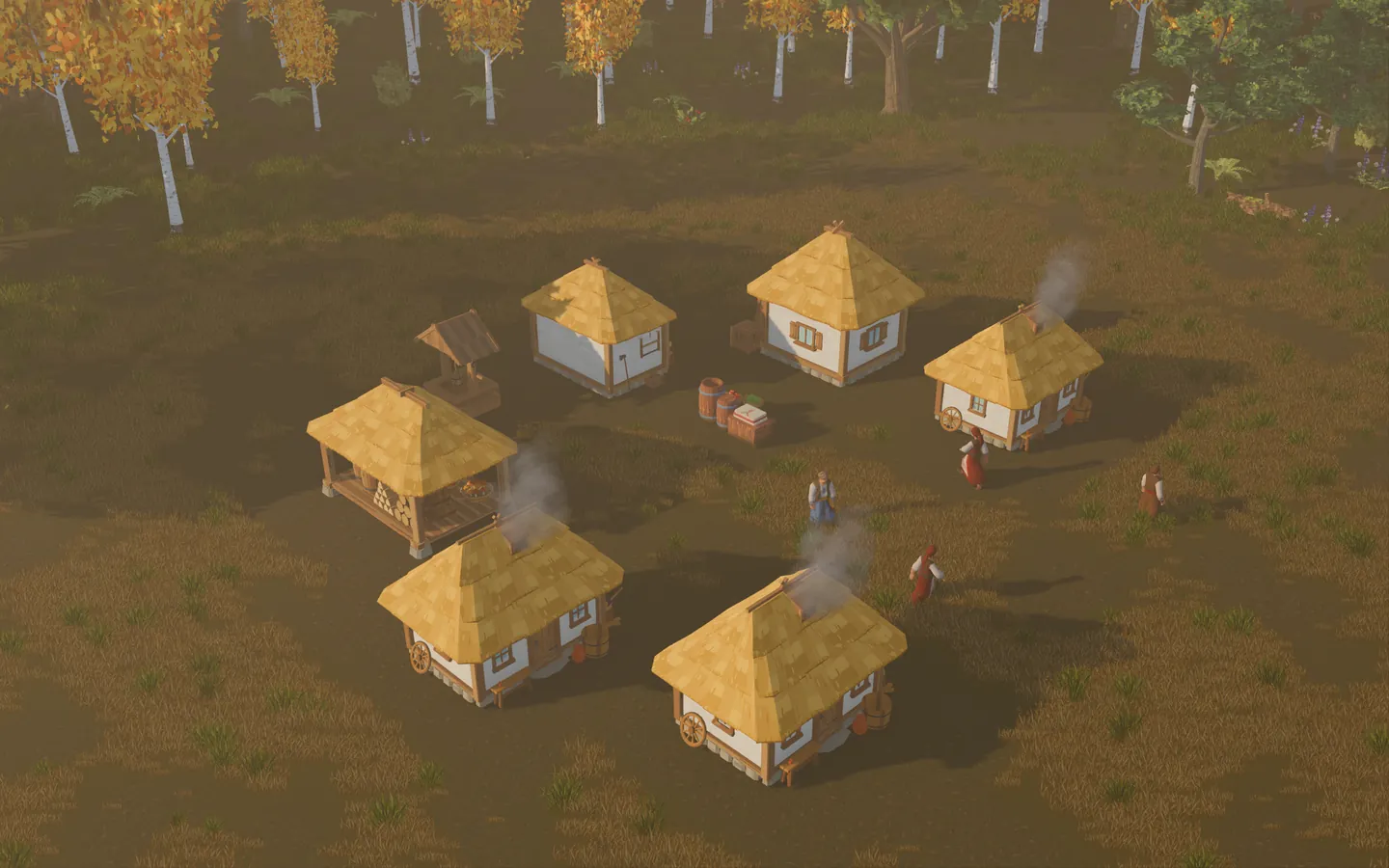
The game is set in this 18th-century world. Settlement ranks are planned, starting in the Next Fest demo: each rank unlocks new buildings as a khutir, a lone farmstead, grows into a village and, in time, a Sich.
Zymivnyky: the winter homesteads
Much of Cossack life happened away from the Sich, on the zymivnyky. The word means 'wintering place'. A small one might be a single dugout for the owner and a pen for one or two pairs of oxen or horses. The largest had more than ten houses and farm buildings, hired workers and herds of hundreds or thousands of animals. A report from 1766 counted about 4,000 of them.
Hunting and fishing came first, then livestock: horses, cattle and sheep. Farming grew in importance through the 18th century, and many homesteads also kept bees, ran mills and planted orchards. Only unmarried Cossacks could live at the Sich itself, so married Cossacks settled with their families on khutory, farms of their own.
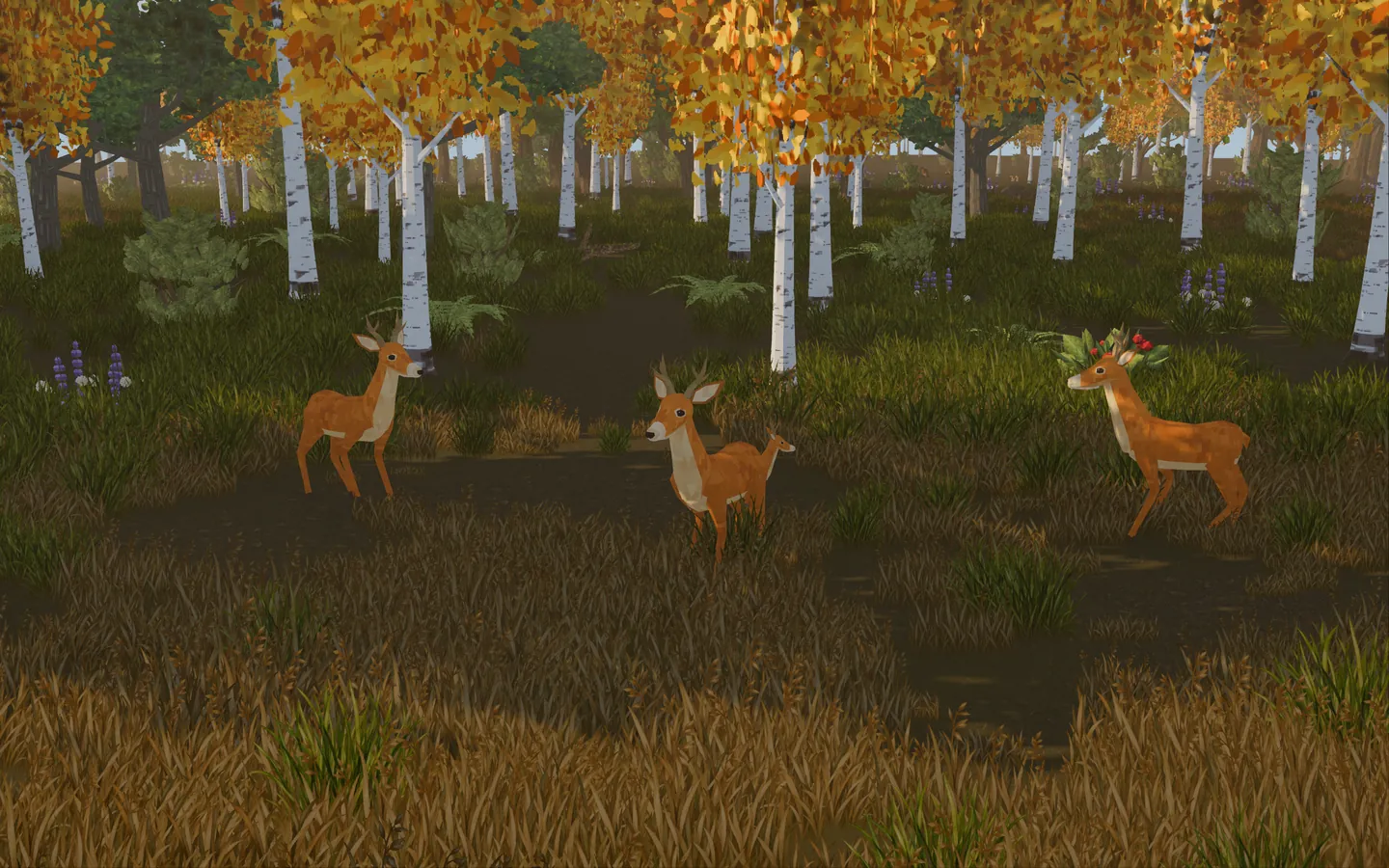
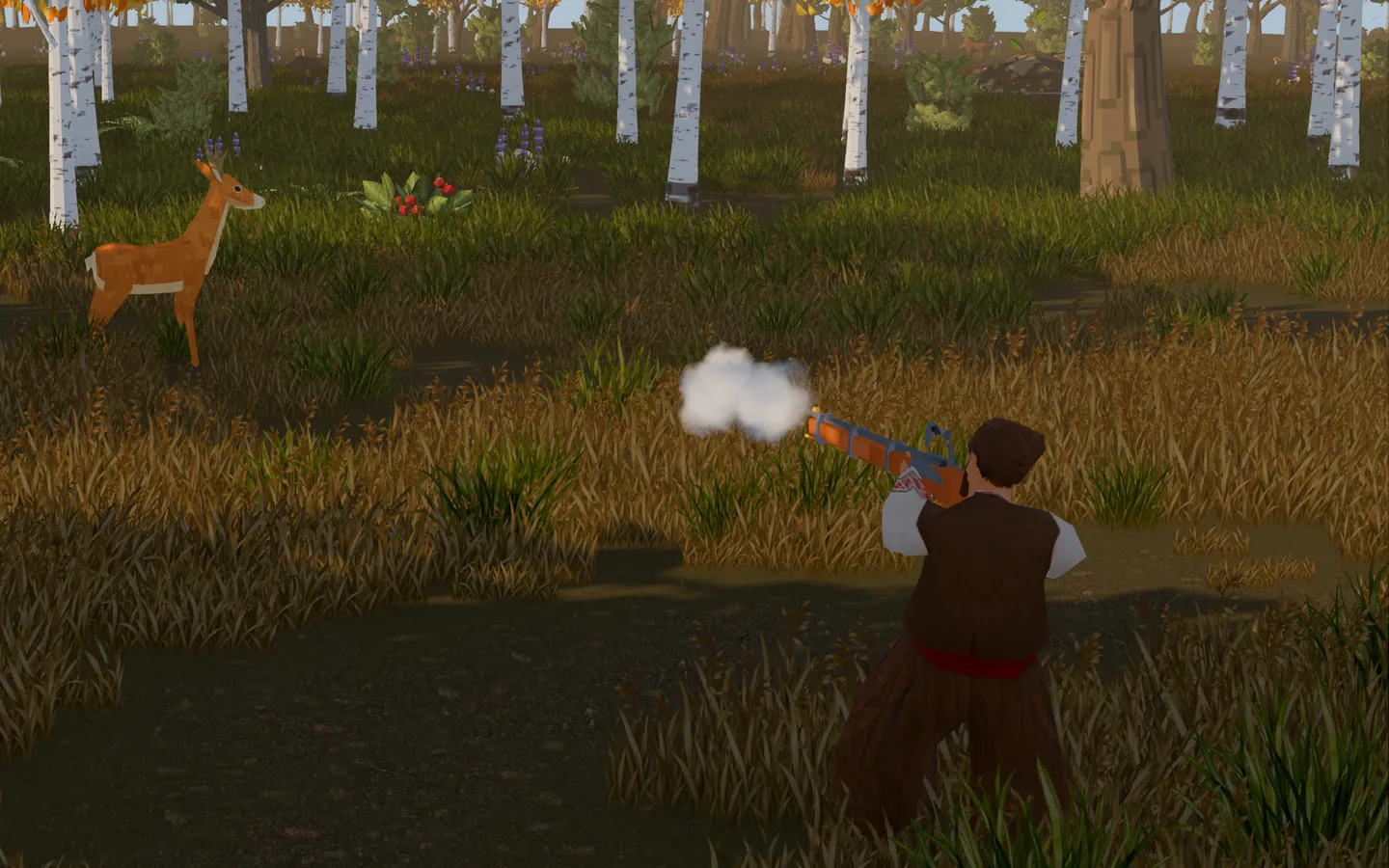
The game starts small too: a band of settlers with a starter wagon and a small stockpile raise their own khatas, fell trees, gather berries and mushrooms, and hunt deer and boar. A fishing hut is planned for the demo, and farming for Early Access.
How the Sich was run: kurins, the Kish and the Rada
Inside the Sich, Cossacks lived in kurins, barrack houses around the central square. A kurin was also a unit of men with its own elected otaman. The Sich traditionally had 38 of them.
The Kish was the Sich government: the Kish otaman with a judge, a scribe, an osaul and a quartermaster. The Sich Council, the Rada, elected them. It met on the central square, decided on war and peace, received envoys and shared out farming and fishing grounds among the kurins. In the 18th century it met twice a year. Majorities were judged by eye, without counting hands.
The Kish otaman served for a year and could be re-elected or removed early. His sign of office was the bulava, a mace. The last Kish otaman, Petro Kalnyshevskyi, held the post in 1762 and again from 1765 to 1775.
Rada decisions are planned: the first events for the Next Fest demo, then 20 to 30 events and timed civics in Early Access that sway productivity, births and happiness. Building the Rada is planned as a campaign goal.
Khatas of wattle, clay and thatch
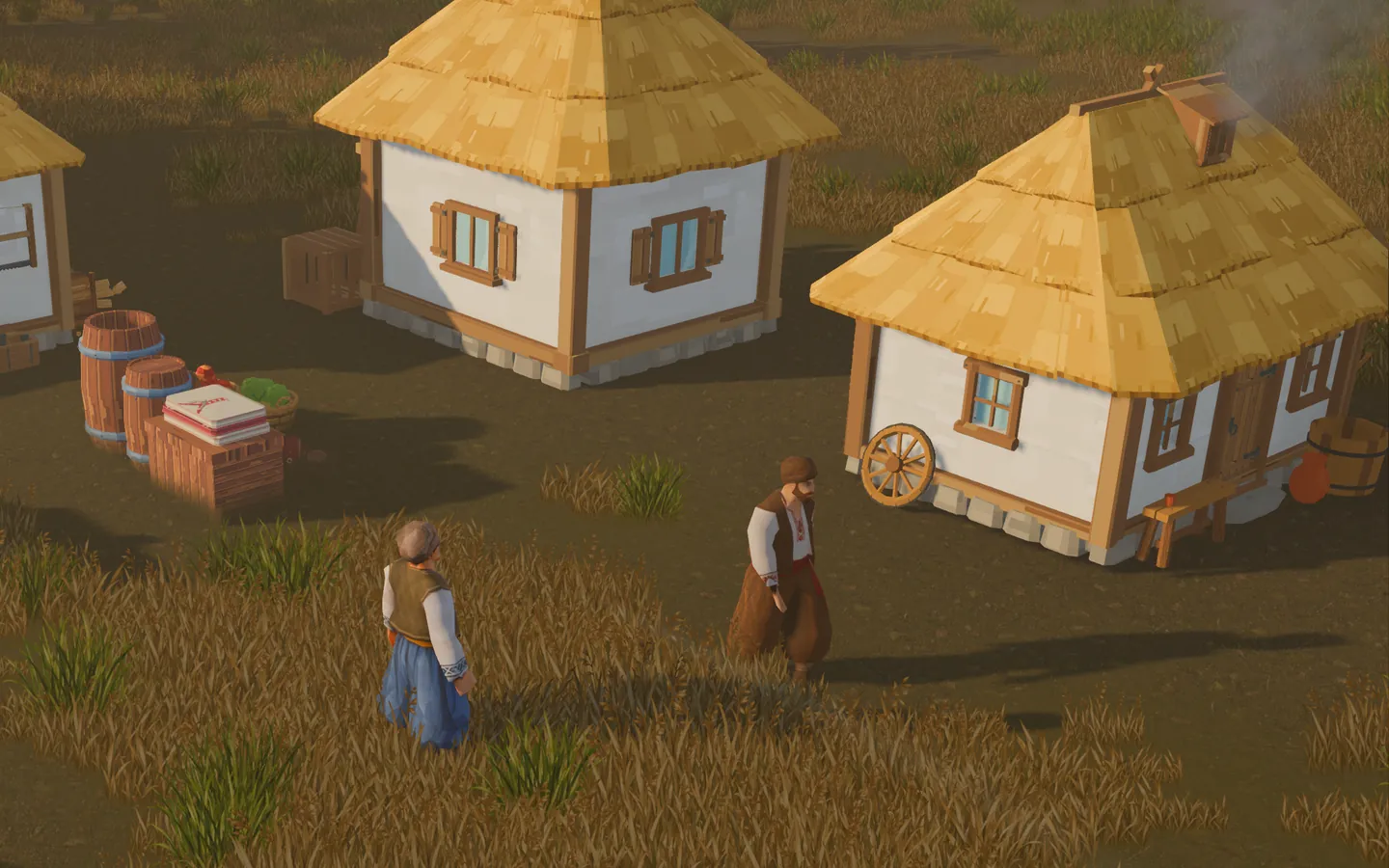
The steppe had little timber, so people built with clay. In the forest-steppe a traditional khata often had a wooden frame with walls of woven willow, twigs or reeds, plastered with clay inside and out. Further south, walls were raised from clay mixed with chopped straw, and wood went only into the roof frame, ceiling, doors and windows. Walls were whitewashed with lime, and roofs were thatched with straw or reed.
Inside, a clay stove, the pich, stood to the right of the door, with a sleeping ledge beside it. The table and icons stood in the corner opposite the stove, the pokutia, the place of honour. Not everyone had a khata: a small winter homestead might be only a dugout.
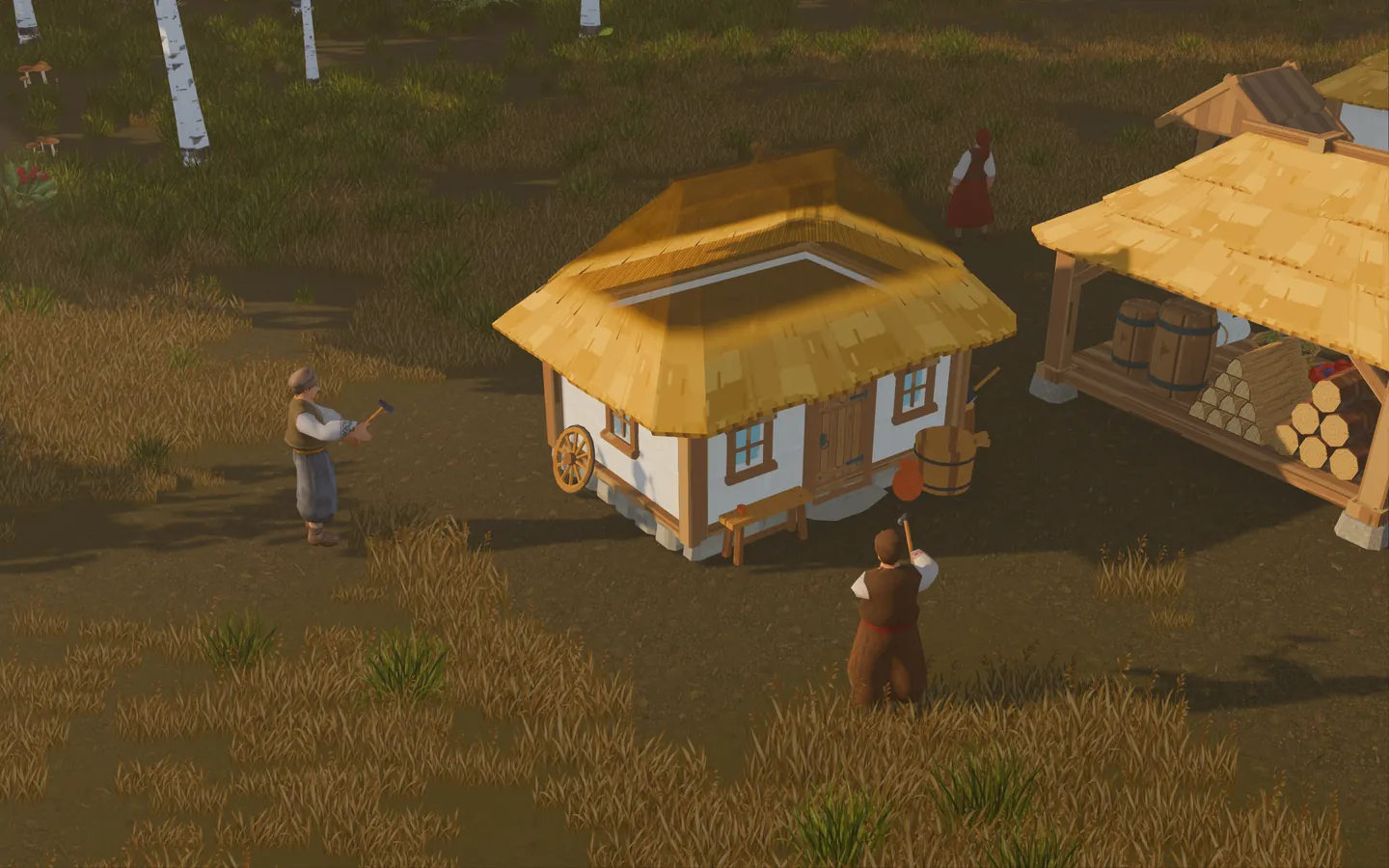
The khatas in the game are whitewashed and thatched, and each one houses up to four people. Villagers need food, water, rest and warmth in winter, so they draw water from a well and split firewood at a splitting station.
Steppe raids and Cossack defence
For centuries, horsemen of the Crimean Khanate and its Nogai vassals raided Ukrainian lands, destroying villages and taking captives to sell in Crimean markets. By 1556 there had been more than 80 such raids, and in 1575 alone more than 35,000 people were taken.
The Cossack host grew up partly as a defence against these raids. Settlers built fortified camps, and the Sich was ringed by a rampart topped with a palisade, towers and gun ports. It was never only war, though. Raiding went both ways, and the Cossacks moved between war and alliance with the khanate. This is a history of raids and wars, not a judgement on the Crimean Tatars as a people, whom Ukraine today recognises as an Indigenous people of Crimea.
Firearms were central to Cossack warfare. The old Ukrainian word samopal covered hand-held guns, and a Cossack with a musket became the emblem of the Zaporizhzhian Host.
Tatar raids are planned for the demo as warned events that grow with your settlement. The planned defences are a palisade, a watchtower and a militia armed with muskets, building on the musket hunting already in the game.
The end of the Sich in 1775
In June 1775, on the orders of Catherine II, a Russian army under General Peter Tekeli surrounded the New Sich. The garrison surrendered the next day. The Sich was razed, its guns, archive and treasury were taken away, and its leaders were arrested. Kalnyshevskyi was imprisoned in the Solovetsky Monastery in the far north and held there for 25 years. In August, Catherine abolished the Zaporizhzhian Host.
Within a few years the winter homesteads were broken up. Some Cossacks left for Ottoman lands and founded the Danubian Sich. Others later formed the Black Sea Cossack Host, which moved to the Kuban. Much of the Great Meadow was flooded by the Kakhovka Reservoir in the 1950s. Parts of it came back into view after Russian forces blew up the dam in June 2023.
The game does not retell these events. It follows one settlement from a lone homestead towards a Sich, with rival Tatar and Muscovite factions planned for later Early Access updates.
Sich: Cossacks Tale is inspired by this history, not a simulation of it: its settlements, villagers and events are made up.
Sources and further reading
- Zaporozhian Sich, Internet Encyclopedia of Ukraine
- New Sich, Internet Encyclopedia of Ukraine
- Zymivnyk, Encyclopedia of the History of Ukraine, Institute of History of Ukraine (in Ukrainian)
- Folk architecture, Internet Encyclopedia of Ukraine
- Tatars, Internet Encyclopedia of Ukraine
- Velykyi Luh: map of the Great Meadow, Texty.org.ua